
Nutrients That Support Immune Function
Written by Freya Torkildsen
Introduction
What we eat has a powerful impact on our health, and the nutrients within our food play a key role in supporting our bodily functions. As we progress through the winter months and cold and flu season peaks, being more mindful of the nutrients we consume becomes increasingly important, as they can help support our immune health. When we don’t get enough of these nutrients, there is an increased risk of disease and infections due to an ill-functioning immune system (Munteanu and Schwartz, 2022).
Key nutrients for a healthy immune system
There are several key vitamins and minerals which play a crucial role in supporting immune function, helping the body defend itself against infection and illness. These key nutrients include:
- Vitamin A
- Vitamin B6, B12, B9
- Vitamin C
- Vitamin D
- Copper
- Iron
- Selenium
- Zinc
These vitamins and minerals play an important role in keeping your immune system strong. They help your body produce and support immune cells, reduce inflammation, and protect your cells from damage caused by oxidative stress – a natural process that can harm cells over time (National Cancer Institute, 2011). When oxidative stress builds up, it may contribute to long-term health problems. By helping to keep this process in balance, these nutrients support your body’s ability to fight off infection and stay well (British Heart Foundation, 2020; National Institutes of Health, 2023).
How can you incorporate these into your diet?
Vitamin A :
Cheese, Eggs, oily fish (such as salmon, sardines, trout, or mackerel), fortified low-fat spreads
B Vitamins :
- B6
Pork, Poultry, Peanuts, soya beans
- B9
Broccoli, brussels sprouts, leafy green vegetables (such as cabbage, kale, and spinach), peas
- B12
Meat, fish, milk, cheese
Vitamin C :
citrus fruit, peppers, strawberries, blackcurrants
Vitamin D :
The body creates Vitamin D from direct sunlight on the skin outdoors; therefore, supplementing 10mcg daily is the most effective way to reach the daily recommendations.
However vitamin D is also found in a small number of foods:
oily fish, red meat, egg yolks, fortified foods (such as some fat spreads and breakfast cereals) & liver
Copper :
Nuts, Shellfish, offal
Iron :
Liver, red meat, beans, nuts
Selenium :
brazil nuts, fish, meat, eggs
Zinc :
Meat, shellfish, dairy foods, bread
(NHS , 2020)
4 recipes to help incorporate these nutrients into your diet
The recipes below are designed to help you easily incorporate the key vitamins and minerals that support a healthy immune system into your everyday diet.
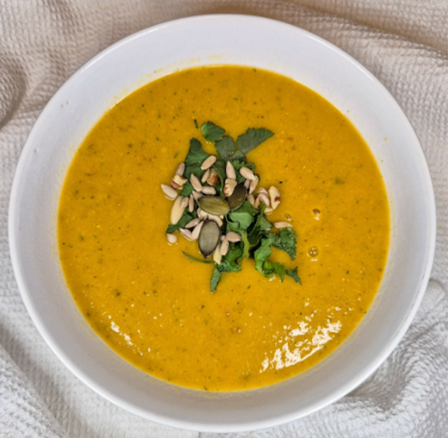
Sweet Potato & Lentil Soup
This nutrient-dense soup is packed with a variety of vitamins and minerals that contribute to immune function:
- Sweet potato, rich in Vitamin A & Vitamin C
- Red lentils provide Zinc, Copper, Selenium, Iron, Vitamin B9, Vitamin B6
- Tomatoes, a source of Vitamin A & Vitamin C
- Soy milk, contains Vitamin A, Vitamin B12, Vitamin D
- Lime, rich in Vitamin C
- Onion, containing Vitamin C
- Apple provides Vitamin C & Vitamin B6
- Garlic, contains Vitamin B6, Vitamin C, Selenium
You can find the full recipe here
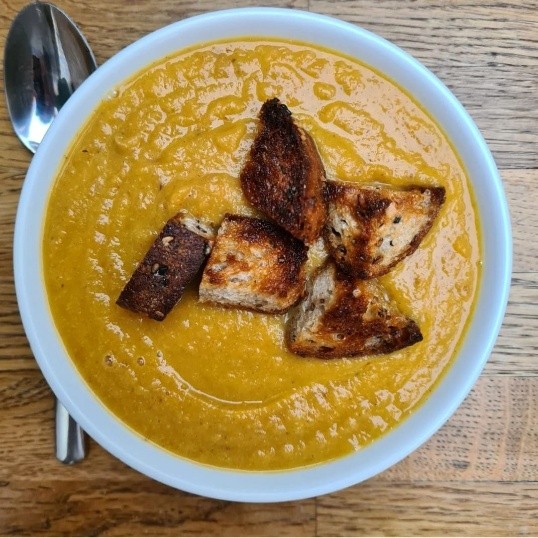
Thai Spiced Butternut Squash Soup
For those who prefer a bit more spice, this soup is also packed with a variety of nutrients which contribute to a healthy immune system:
- Sweet potato, rich in Vitamin A & Vitamin C
- Turmeric, containing Vitamin C, Vitamin B12, Iron
- Ginger, containing Vitamin B6, Vitamin C, Zinc
- Carrots provide Vitamin A, Vitamin C, Vitamin B9, Vitamin B6
- Onion, containing Vitamin C
- Garlic, source of Vitamin B6, Vitamin C, Selenium
- Cinnamon, source of Iron & Zinc
- Coconut milk, provides Vitamin C & Iron
You can find the full recipe here
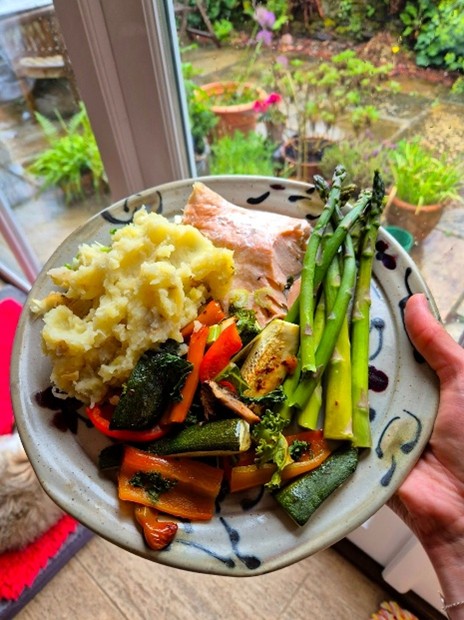
Salmon, lemony asparagus, roasted vegetables and mash
This colourful, nutrient rich bowl provides a large range of essential immune boosting nutrients:
- Salmon, rich Vitamin A, Vitamin D, Vitamin B6, Selenium
- Asparagus, containing Vitamin A, Vitamin C, Vitamin B9
- Lemon, rich Vitamin C
- Peppers provide Vitamin A, Vitamin C, Vitamin B6
- Courgette provides Vitamin A, Vitamin C, Vitamin B6, Vitamin B9
- Carrots, containing Vitamin A, Vitamin C, Vitamin B9, Vitamin B6
- Paprika source of Vitamin A, Vitamin C, Iron, Vitamin B6
- Potatoes, containing Vitamin B6, Vitamin B9, Vitamin C
You can find the full recipe here
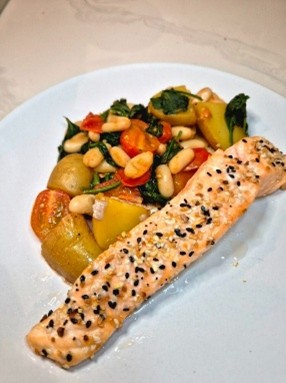
Roasted salmon with sesame & cannellini beans
This hearty meal provides a rich mix of immune boosting ingredients:
- Salmon source of Vitamin A, Vitamin D, Vitamin B6, Selenium
- New potatoes, source of Vitamin B6, Vitamin B9, Vitamin C
- Cannellini beans provide Zinc, Iron, Vitamin B9, Copper, Selenium
- Spinach provides Vitamin A, Vitamin C, Folate, Iron
- Cherry Tomatoes rich in Vitamin A & Vitamin C
You can find the full recipe here
Conclusion
The amount and type of nutrients we consume are directly linked to the health of our immune system; a weakened immune system may be connected to inadequate nutritional intake.
It’s crucial to include these vital vitamins and minerals for immune support if you want to ensure your immune system continues to be an optimal environment for preventing illness and infection.
Reference list
British Heart Foundation (2020). Boosting immunity. [online] Bhf.org.uk. Available at: https://www.bhf.org.uk/informationsupport/heart-matters-magazine/nutrition/ask-the-expert/boosting-immunity [Accessed 2 Feb. 2026].
Munteanu, C. and Schwartz, B. (2022). The Relationship between Nutrition and the Immune System. Frontiers in Nutrition, [online] 9(1), pp.1–23. doi:https://doi.org/10.3389/fnut.2022.1082500.
National Cancer Institute (2011). Oxidative Stress. [online] www.cancer.gov. Available at: https://www.cancer.gov/publications/dictionaries/cancer-terms/def/oxidative-stress [Accessed 14 Feb. 2026].
National Institutes of Health (2023). Office of Dietary Supplements – Dietary Supplements for Immune Function and Infectious Diseases. [online] ods.od.nih.gov. Available at: https://ods.od.nih.gov/factsheets/ImmuneFunction-HealthProfessional/ [Accessed 2 Feb. 2026].
NHS (2020). Overview – Vitamins and minerals. [online] NHS. Available at: https://www.nhs.uk/conditions/vitamins-and-minerals/ [Accessed 2 Feb. 2026].