
What are Ultra-Processed Foods (UPFs)?
Written by Freya Torkildsen
Introduction
When looking for dietary advice, the phrase ‘avoid ultra-processed foods’ is often thrown around as one of the rules for having a healthy diet, but what does that actually mean? And are all processed foods really that bad for our health?
Ultra-processed foods, in particular, have become a growing concern in public health. Regularly consuming these foods has been linked to poor overall diet quality and an increasing number of negative health issues; therefore, they are an important topic to understand in today’s food environment.
What are Ultra-Processed Foods?
Ultra-processed foods (UPFs) are foods which contain a formulation of ingredients, typically created via a series of industrial processing techniques to create a product which bears little resemblance to the original ingredients. In other words, UPFs contain one or more ingredients that wouldn’t be found in your kitchen, such as chemical based preservatives, emulsifiers, sweeteners and artificial colours and flavours (Coulson, 2025).
Examples of UPFs may include sweetened breakfast cereals, energy drinks, ready meals or sweets. These foods are often very convenient, palatable and widely available, which helps explain why they make up a substantial portion of people’s diets.
However, it’s important to recognise that food processing itself is not inherently harmful. In fact, many food processing techniques play important roles in food safety, nutrition and affordability. For example:
- Pasteurisation, which kills harmful bacteria
- Cooking, which ensures foods are safe for consumption
- Fortification adds vitamins and minerals to foods to improve their overall nutritional content
(Food Standards Agency, 2024)
Processing can also improve a food’s taste and texture, increase its shelf life and make food more affordable and accessible. Understanding the difference between necessary processing and ultra-processing is key.
Ultra-processed Foods vs Processed Foods
The terms ‘processed’ and ‘ultra-processed’ are used to describe how a product has been made rather than how healthy it is.
According to the Department of Agriculture, processed foods are any raw agricultural commodities altered from their original state. This includes, washing, cutting, heating, canning, freezing, packaging etc. For example, pre-washed, peeled and chopped carrots are an example of a product which has been processed.
While processing includes these basic steps, foods are considered ultra-processed when they contain preservatives, flavourings and food additives.
The Nova food classification system defines food into four categories ranging from least to most processed:
- Unprocessed/minimally processed foods, such as fruits, vegetables, milk and fish.
- Processed culinary ingredients, such as salt, sugar, olive oil and butter.
- Processed foods, such as jam, canned fruit, cheese and pickles.
- Ultra-processed foods, such as energy drinks, hot dogs, ready meals and crisps.
(Harguth, 2024)
Why Ultra-Processed Foods Aren’t All ‘Bad’ for Us
UPFs are typically portrayed as something we should avoid entirely, but the reality is far more nuanced. Not all processed foods or even all UPFs are inherently harmful. In fact, many foods that support a healthy diet undergo some degree of processing.
Several everyday staple foods fall into this category:
- Whole-grain bread, pre-cut vegetables and low-fat dairy milk all undergo processing yet remain nutritious, practical, affordable and highly recommended options as part of a balanced diet (Harguth, 2024).
- Fortified foods also play an important role in providing adequate nutrient intake. For example, vitamin D, B12, calcium and iodine are commonly added to dairy and plant-based milks, yoghurts, juices as well as some breakfast cereals which are fortified with fibre (Harguth, 2024).
- Canned fruits or vegetables in water or natural fruit juices are also considered processed but act as healthy alternatives to fresh fruit or vegetables when unavailable (Harguth, 2024).
These products demonstrate that processing in itself isn’t the issue, and in many cases they help to address nutritional gaps and increase accessibility.
When UPFs become problematic
UPFs become problematic when they dominate the contents of our diet. Recent evidence indicates that UPFs contribute to approximately 50% of total dietary intake in children, highlighting how prevalent these products have become within modern eating patterns (Warrender, 2024). Foods with poor nutrient density, high sugar and fat contents in excess are when health issues can arise.
Being selective about the types of processed foods we choose can make a meaningful difference. For example:
- Fortified whole-grain cereals in place of cereals high in added sugars
- Plant based milks with minimal additives in place of those high in added sugars
A Balanced Approach is More Realistic than Total Avoidance
Completely avoiding UPFs is neither practical nor necessary. A more sustainable approach is to prioritise balance and moderation. Overly restrictive rules can lead to cycles of guilt surrounding food, bingeing or yo-yo dieting, whereas flexible, more informed choices can support long-term healthy dietary patterns. Read our blog on ‘Ditching Diets – Why Dieting Is Designed To Fail’
The UK’s Eatwell Guide (pictured below) reflects this approach. It emphasises limiting foods and drinks high in fat, sugar and or salt, many of which fall into the UPF category. By following these guidelines, we are also likely to reduce the amount of UPFs we are consuming without eliminating them entirely from our diet (Food Standards Agency, 2024)
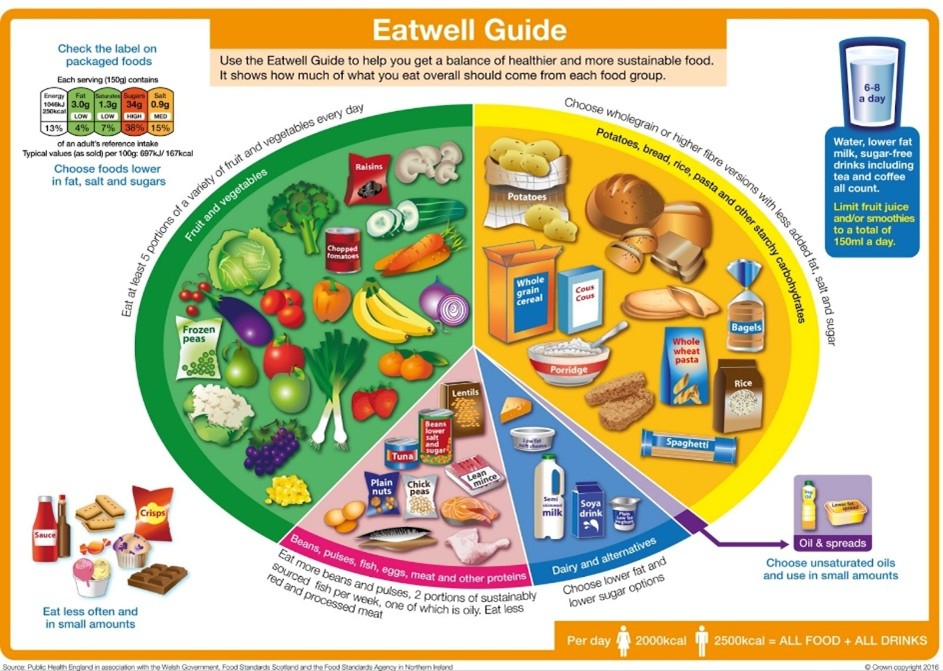
(GOV.UK, 2016)
Conclusions
UPFs cover a wide and varied group of food products. While some UPFs are unhealthy and may not hold high nutritional value, others can still form part of a balanced diet. For example a ready meal high in saturated fat or salt is classed as Ultra-processed, but so is a shop-bought wholegrain loaf of bread, a food which can contribute positively to dietary intake.
Rather than focusing on eliminating all UPFs, a more realistic and evidence-based approach is to consider overall dietary patterns. Increasing mindful food choices and aligning eating habits with supported guidance such as the Eatwell Guide provides a practical reality for improving diet quality without unnecessary restriction. If you want further support and accountability, speak with a Registered Nutritionist or Dietitian.
References
Coulson, M. (2025). What Are Ultra-Processed Foods? | Johns Hopkins Bloomberg School of Public Health. [online] Johns Hopkins Bloomberg School of Public Health. Available at: https://publichealth.jhu.edu/2025/what-are-ultra-processed-foods [Accessed 7 Jan. 2026].
Food Standards Agency (2024). Ultra-processed Foods | Food Standards Agency. [online] www.food.gov.uk. Available at: https://www.food.gov.uk/safety-hygiene/ultra-processed-foods [Accessed 7 Jan. 2026].
Gov.UK (2016). The Eatwell Guide . Gov.UK. Available at: https://www.gov.uk/government/publications/the-eatwell-guide [Accessed 10 Jan. 2026].
Harguth, A. (2024). What you should know about processed foods. [online] www.mayoclinichealthsystem.org. Available at: https://www.mayoclinichealthsystem.org/hometown-health/speaking-of-health/processed-foods-what-you-should-know [Accessed 8 Jan. 2026].
Warrender, E. (2024). A new study shows ultra-processed food makes up 59% of children’s food. [online] Open Access Government. Available at: https://www.openaccessgovernment.org/a-new-study-shows-ultra-processed-food-makes-up-59-of-childrens-food/183825/ [Accessed 12 Mar. 2026].
Follow me on Instagram