
Fuel Your Cycle: A Nutritionist’s Guide to Eating for Your Menstrual Cycle
Written by Freya Torkildsen
Introduction
If you’ve ever wondered why you find yourself experiencing intensified cravings before your period or why your hunger patterns change from week to week, you’re not lacking ‘willpower’, the answer instead lies in your hormones. Despite the commonality of these appetite changes, they are often misunderstood or dismissed. In this blog we will uncover the science behind these cyclical appetite changes to help you gain a better understanding of your body and offer practical ways in which to support it during hormonal fluctuations which occur throughout the menstrual cycle.
Hormonal explanations
Cravings tend to peak in the days leading up to your period, it’s not because you’ve ‘lost control’, it’s because your body is dealing with major hormonal changes.
Hormonal fluctuations during the menstrual cycle have shown to cause significant alterations in eating habits, food intake and preferences. These alterations can be traced back to the hormones oestrogen and progesterone which play an important role in metabolic regulation (Candan, Metin and Tengilimoglu-Metin, 2025).
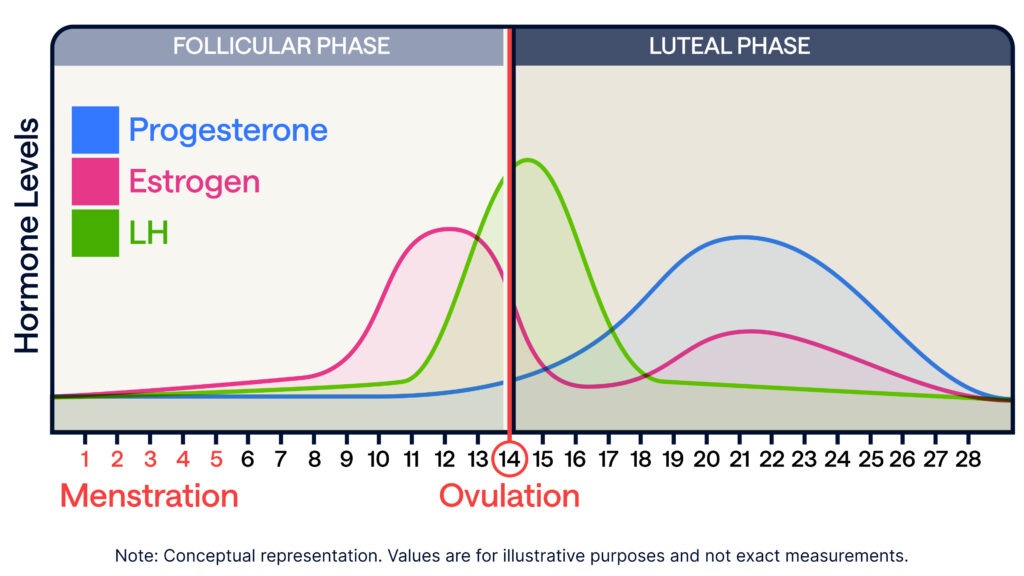
Increased oestrogen levels occur during the follicular phase of the menstrual cycle (Days 3-7 to 12) to prepare the body for potential pregnancy. This hormonal surge has various metabolic influences which can contribute to a reduced appetite and greater dietary restraint (Nowak et al., 2020).
After ovulation (Days 12-16), progesterone rises significantly before it eventually falls in the late luteal phase. This rise in progesterone stimulates appetite, therefore explaining why you may feel more hungry at the beginning of your luteal phase (Hirschberg, 2012).
(TRAININGPEAKS, n.d.)
As the cycle progresses into the luteal phase (Day 16-28), levels of progesterone and oestrogen hormones begin to drop, signalling that pregnancy did not occur. This decline can cause your mood to dip and increase irritability, anxiety and fatigue which can cause your brain to seek quick comfort (Candan, Metin and Tengilimoglu-Metin, 2025).
These changes also influence serotonin, also known as our happy hormone. Serotonin is a neurotransmitter, a chemical messenger which carries nerve signals between the brain and the body, which has influence over our mood. Reduced serotonin availability can increase vulnerability to emotional eating habits and increased cravings for carbohydrate rich foods, which provide temporary energy and mood improvements (Harland, 2025; Candan, Metin and Tengilimoglu-Metin, 2025). Your body isn’t being dramatic, it’s trying to improve your mood and stabilise your energy in the fastest way possible. So if you’re craving pasta, pizza, chocolate or anything beige and comforting, it’s not a personal unhealthy failure, it’s biology doing exactly what it’s designed to do.
Together these mechanisms explain why hunger and cravings vary so predictably throughout the menstrual cycle.
Diet Culture and its Lack of Consideration for the Menstrual Cycle
Diet culture with its fixation on restriction, weight loss and ‘good’ vs ‘bad’ foods, often disregards the natural cyclical needs of the body, which can result in hormonal imbalances, worsened premenstrual symptoms (PMS) and menstruation cessation in extreme cases (Carroll, 2022).
The pressures introduced in a dieting environment can also exacerbate body dissatisfaction and dysmorphia, which often become more pronounced during the PMS phase due to heightened emotional sensitivity (Sharkey, 2020). Instead of supporting your body through these physical and emotional shifts, diet culture encourages self criticism at a time where nourishment and compassion are most needed.
Your menstrual cycle is a period of increased physiological and psychological demand and should not be a time to feel worse in your body, but instead an opportunity to respond to your body’s biological needs with care.
What your body needs at each phase
Menstrual phase
During this stage of your cycle it’s important to replenish the nutrients lost after bleeding. Iron rich foods should be the focus during this phase as well as B vitamins to support energy levels (Care, 2023). Foods rich in Omega-3 and magnesium are also important to ease cramping (Care, 2023).
Iron rich foods:
- Leafy greens – spinach or cavelo nero
- Legumes – beans
- Red meat
B vitamin rich foods:
- Eggs
- Whole grains – bread, cereals, quinoa, beans, nuts and seeds
- Dairy products – yoghurt, cheese, milk or fortified milk alternatives e.g oat/soy milk with added vitamins and calcium
Omega-3 rich foods:
- Fatty fish such as salmon or mackerel (aim for 1 portion of oily fish per week)
- Nuts and seeds – flaxseed & walnuts
Magnesium rich foods:
- Dark chocolate – enjoy 1-2 squares
- Bananas – 1 counts towards one of your 5 a day
- Avocado – one portion is about half a medium sized avocado
Follicular phase
Magnesium levels are often lowest during this phase, so it’s important to prioritise magnesium rich foods in your diet during this time. As oestrogen levels are increasing during the follicular phase, magnesium rich foods can reduce PMS symptoms and reduce heavy periods (Ilchovska, n.d.). Magnesium rich foods along with fruits, vegetables and wholegrains can provide the necessary nutrients needed during this phase.
Ovulation phase
This phase is the only time during the menstrual cycle in which pregnancy can occur, oestrogen peaks during this phase (Ilchovska, n.d.). High fibre foods and antioxidants can support hormonal balance during this phase (Ilchovska, n.d.).
Fibre rich foods:
- Fruits & Vegetables (raspberries, carrots, broccoli)
- Legumes (lentils, beans)
- Nuts and seeds (pistachios, chia, almonds)
Antioxidant rich foods:
- Berries – strawberries are officially in season in the UK
- Nuts and seeds
Luteal phase
During the luteal phase, progesterone levels peak. If pregnancy does not occur, this phase is associated with PMS symptoms as your body prepares for your next period (Ilchovska, n.d.). Magnesium can help reduce painful PMS symptoms, like cramps, by relaxing the uterus and lowering prostaglandins (chemical messengers which regulate inflammation and pain) (Falcke, 2018). Foods rich in B vitamins and healthy fats can also support mood and hormonal balance (Care, 2023).
Foods rich in healthy fats:
- Avocados
- Nuts and seeds
- Olive Oil
- Oily fish (salmon, mackerel, sardines, trout)
B vitamin rich foods:
- Leafy greens such as kale (one portion is 2 cupped hands)
- Whole grains
- Eggs – one portion is 1-2 eggs for adults
Free recipes to help you include these nutrients
Conclusions
Understanding how your appetite, cravings and energy levels shift throughout your menstrual cycle is not about ensuring more ‘self discipline’ when it comes to what you’re eating, it is about recognising and responding to the biological changes your body is experiencing. Hormonal fluctuations in oestrogen, progesterone and serotonin have substantial influences on mood and metabolism, meaning that appetite changes are not something to be demonised, instead they should be treated as predictable physiological changes.
When diet culture dismisses these hormonal changes or encourages restrictive dietary habits at times of increased physiological demand, it can intensify both physical and emotional PMS symptoms. Instead, work with your cycle by focusing on nourishing your body according to each phase’s needs and responding with compassion rather than criticism can support hormonal balance, mood stability and overall wellbeing.
Your menstrual cycle is not something to fight against but instead a guide. By listening to your body’s needs you can navigate through the month with greater understanding and less guilt all while developing a deeper connection with your own health needs.
Reference list
Candan, E., Metin, Z.E. and Tengilimoglu-Metin, M.M. (2025). The role of premenstrual syndrome in hedonic hunger and food craving during the menstrual cycle. Journal of Nutritional Science, [online] 14. doi:https://doi.org/10.1017/jns.2025.10038.
Care, E. (2023). Menstrual Cycle Food Chart. [online] Elara Care. Available at: https://elara.care/nutrition/menstrual-cycle-food-chart/#menstrual-phase-foods [Accessed 29 Apr. 2026].
Carroll, S. (2022). Does dieting affect your period? [online] www.avogel.co.uk. Available at: https://www.avogel.co.uk/health/periods/does-dieting-affect-your-period/ [Accessed 28 Apr. 2026].
Falcke, J. (2018). Magnesium and the menstrual cycle. [online] helloclue.com. Available at: https://helloclue.com/articles/cycle-a-z/magnesium-and-the-menstrual-cycle [Accessed 14 May 2026].
Harland, N. (2025). Hormones and hunger: why your appetite changes during your period. [online] Numan.com. Available at: https://www.numan.com/weight-loss/diet/why-your-appetite-changes-during-your-period [Accessed 27 Apr. 2026].
Hirschberg, A.L. (2012). Sex hormones, appetite and eating behaviour in women. Maturitas, [online] 71(3), pp.248–256. doi:https://doi.org/10.1016/j.maturitas.2011.12.016.
Ilchovska, D. (n.d.). Foods to eat for each stage of your menstrual cycle –. [online] London Clinic of Nutrition. Available at: https://londonclinicofnutrition.co.uk/nutrition-articles/foods-to-eat-for-each-stage-of-your-menstrual-cycle/.
Nowak, J., Spalik-Bytomska, A., Hudzik, B., Jagielski, P., Grochowska-Niedworok, E., Gąsior, M. and Zubelewicz-Szkodzińska, B. (2020). Food intake changes across the menstrual cycle: A preliminary study. Nursing and Public Health, [online] 10(1), pp.5–11. doi:https://doi.org/10.17219/pzp/114280.
Sharkey, L. (2020). Period-Related Body Dysmorphia Is a Thing — This Could Be Why. [online] Healthline. Available at: https://www.healthline.com/health/menstruation/pms-body-dysmorphia [Accessed 29 Apr. 2026].
TRAININGPEAKS (n.d.). Hormone levels throughout the menstrual cycle . trainingpeaks . Available at: https://www.trainingpeaks.com/blog/understanding-your-cycle-and-performance/ [Accessed 27 Apr. 2026].