
Staying nourished and motivated through the festive season
Written by Millie Rose
Have you ever found yourself skipping meals around Christmas and New Year to ‘save up’ for later?
Christmas and New Year can be an anxious time for individuals with various goals, like weight management or managing symptoms. However, this is a time to enjoy the social opportunities and some time off work. Whilst it is important that you progress with your goals, you do not have to restrict your diet to enjoy the holidays. This blog will delve into nutrition, behaviour and fitness during Christmas and the New Year, concluding with my top 7 tips to stay healthy this Christmas whilst working and socialising!
Nutrition
Portion sizes
Foods consumed at Christmas are often richer, due to added butter, oils, alcohol and sugars, and often eaten in larger quantities. Whilst you should eat traditional foods, try to manage portion sizes. You may do this by:
- Portioning your food before sitting down to eat to reduce grazing
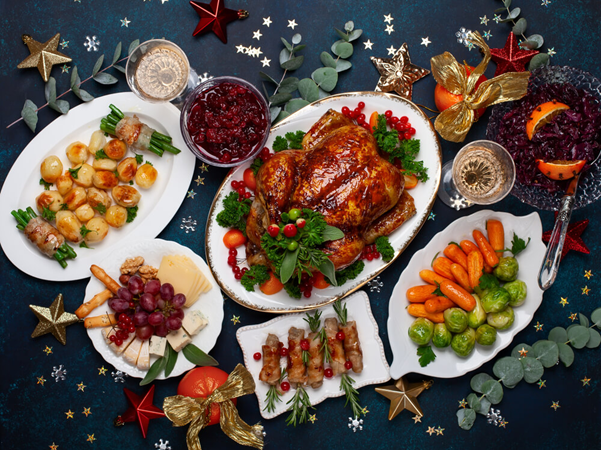
- Add vegetable sides to your christmas dinner such as red cabbage, roasted parsnips, carrots, cauliflower or leeks. This adds fibre to your meal helping with fullness and digestion.
- Using a slightly smaller plate to allow room for indulgences
- Commit to one plate at a time. Once you have finished it, wait 10 minutes to decide whether you are still hungry, rather than mindlessly nibbling.
- Eat intuitively, read the blog on Intuitive vs Mindful Eating: The impact on weight loss and overall health.
Increased high sugar snacks and drinks
During Christmas, we are exposed to indulging in delicious seasonal snacks and drinks, such as chocolates, hot chocolate and mulled wine. To establish healthy eating habits (which do include indulging in a bit of chocolate occasionally!):
- To help you visualise what you are consuming, try using a side plate and dish your snacks before eating them
- Can you pair chocolate with fruit and/or yoghurt to add nutrients and fibre to your diet. This will help you feel more satisfied than just eating chocolate alone and may reduce mindless eating and over eating.
- See blog post on drinking during conception and pregnancy: there are some examples of low sugar, no alcohol drinks
Increased fat and salt intake
Foods such as gravy, roasted foods in oil, cheese and party foods tend to be high in fat and salt, particularly if you buy them pre-made (WHO, 2012; BHF, 2025).
To reduce salt intake:
- Where possible, make these yourself, using herbs and spices instead of excess amounts of salt
- Before adding more salt, taste the food and assess the need. Sometimes it doesn’t need it!
To reduce saturated fat:
- Choose leaner meats, such as turkey or chicken, instead of pork
- Reduce the amount of oil vegetables are cooked in. Try using a pastry brush to spread oil; you will use less this way.
Increased alcohol intake
Social events increase alcohol consumption. Alcohol is high in calories and can make hunger cues difficult to interpret. Furthermore, drinking alcohol can decrease hydration if soft drinks or water are not consumed.
- Set a limit before you drink to avoid “one more”
- Have water or a soft drink in between alcoholic drinks
- Choose smaller glasses
- Sip and save!
- Avoid drinking on an empty stomach.
- See the blog on The Impact of Alcohol When Trying to Conceive and in Pregnancy for alcoholic drink alternatives.
Irregular eating patterns
Have you ever found yourself skipping meals around Christmas and New Year to ‘save up’ for later? This is common, but it will often lead to grazing later and more being eaten. As well as this, during the busy festive period, we generally eat later too. Try:
- Having a light balanced snack a few hours before a big meal, for example, a yoghurt bowl with fruit and granola
- If you aren’t hungry a few hours after a big meal, try having a light snack, for example apple and peanut butter. This will help prevent grazing once your blood sugar has reduced.
- Try to plan meals to be ready earlier. Eating late in the evening can disrupt your sleep and affect your digestion.
Lower protein and fibre intake
Protein and fibre help you feel satisfied after eating a meal. During Christmas, carbohydrates and fats can often crowd your plate, leading to peaks in your blood sugar levels and grazing later. When you are eating:
- THINK
- Have you got enough vegetables? They should cover just over a third of the plate and have a variety of colours – red cabbage, parsnips, carrots, sproutsChoose wholegrains where possible, for example, using wholegrain breadcrumbs to make stuffing.
- Prioritise lean cuts of meat, such as turkey instead of pork, as these have more protein and less fat.
Temporary weight gain
We have discussed a few factors contributing to temporary weight gain during Christmas and the New Year. For example, excess food consumption and higher salt intake and alcohol may lead to temporary water retention and fat storage. However, by using the suggestions provided, you can reduce the discomfort associated with water retention and bloating.
Fitness
Did you know that walking after big meals reduces your blood sugar? By doing this, you reduce the blood sugar spike (Colberg et al., 2009; Buffey et al., 2022).
Staying active is not just important for your physical health, but also for your mental health. Staying active can reduce stress, which can be heightened during the Christmas holidays, and improve your mood and sleep.
Important: We don’t need to do more exercise, so we can eat certain foods
- Exercise is not a punishment: movement should make you feel strong, healthy and help you relax
- Food isn’t something to earn; it is essential for functioning
- Long-term weight management comes from patterns and staying consistent, not exercising as a punishment
Remember..
You should maintain an active lifestyle all year round. This should not change at Christmas or New Year.
Try different types of exercise and see what you enjoy the most (you’re most likely to maintain this!). Exercise regime’s are also likely to change depending on what stage of life you are at. If you are a parent, time is going to be a big barrier for you. Find something that fits around your busy schedule such as something home-based. There are lots of forms of exercise, including social and individual movements:
- Yoga or stretching
- Pilates
- Walking
- Dancing
- Running
- Weightlifting
- Team sports: netball, football, tennis, etc.
Top 7 tips to stay healthy this Christmas whilst working and socialising:
- Control your portion sizes- use smaller plates and plate up your food rather than grazing
- Fill just over a third of your plate with vegetables – think colour!
- Include starchy carbohydrates, including potatoes and rice (choose wholegrain where possible)
- Reduce your alcohol consumption – choose smaller glasses or opt for non-alcoholic drinks.
- Reduce salt content- make gravy and stuffing yourself, and use herbs and spices rather than salt.
- Choose lean cuts of meat, such as turkey (higher protein, less fat)
- Plan meals, eat earlier in the evening, and have balanced snacks in between
Remember:
You don’t need a New Year’s resolution to make healthy changes. Long-term change happens when motivation, opportunity and capability is consistent. By making a few subtle changes over a long period of time, you will achieve your goals and sustain them!
References
British Heart Foundation (2025). Fats explained. [online] British Heart Foundation. Available at: https://www.bhf.org.uk/informationsupport/heart-matters-magazine/nutrition/sugar-salt-and-fat/fats-explained.
Buffey, A.J., Herring, M.P., Langley, C.K., Donnelly, A.E. and Carson, B.P. (2022). The acute effects of interrupting prolonged sitting time in adults with standing and light-intensity walking on biomarkers of cardiometabolic health in adults: A systematic review and meta-analysis. Sports Medicine, 52(8). doi:https://doi.org/10.1007/s40279-022-01649-4.
Colberg, S.R., Zarrabi, L., Bennington, L., Nakave, A., Thomas Somma, C., Swain, D.P. and Sechrist, S.R. (2009). Postprandial walking is better for lowering the glycemic effect of dinner than pre-dinner exercise in type 2 diabetic individuals. Journal of the American Medical Directors Association, [online] 10(6), pp.394–397. doi:https://doi.org/10.1016/j.jamda.2009.03.015.
World Health Organization (2012). Examples of sodium content in various foods and food groups. [online] www.ncbi.nlm.nih.gov. Available at: https://www.ncbi.nlm.nih.gov/books/NBK133307/.